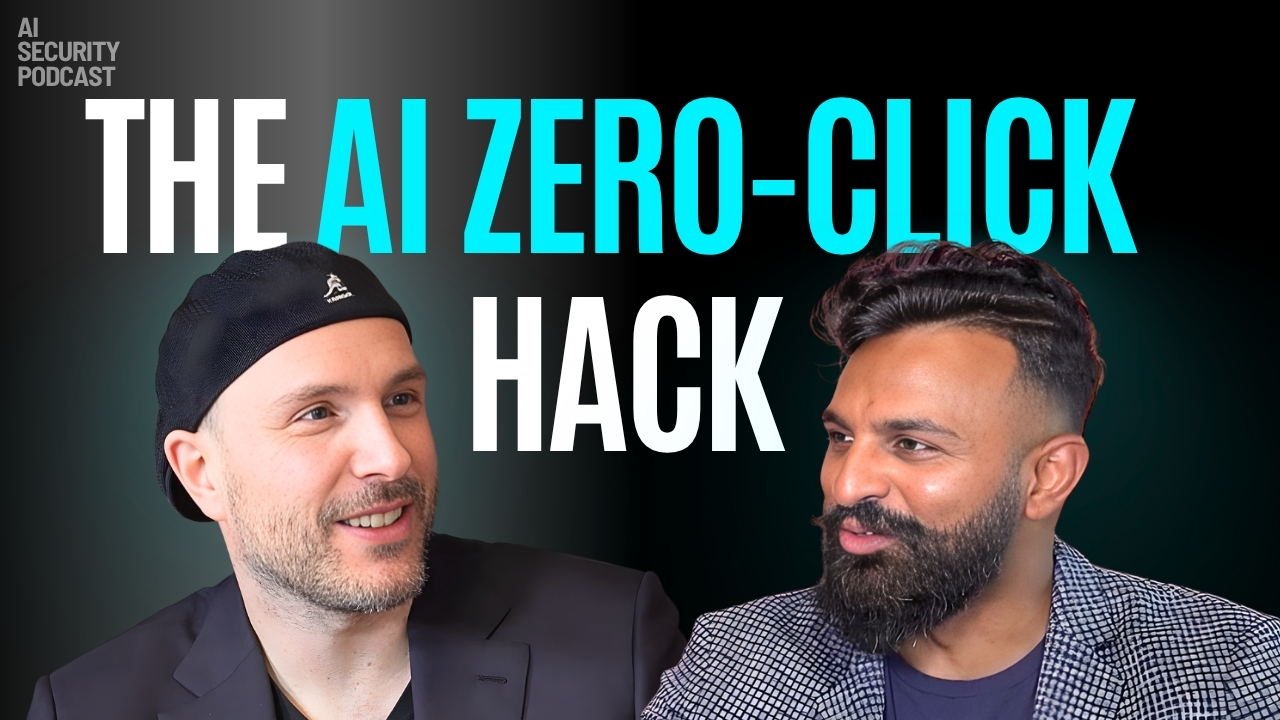
When cyber attackers leverage AI to operate at machine speed, relying on fragmented tools and manual security operations is no longer a viable strategy. To combat modern AI-enabled attacks, enterprise security teams must adopt autonomous defense mechanisms that safely auto-remediate vulnerabilities without breaking production environments.
In this episode of the AI Security Podcast, Ashish sits down with Galina Antova, CEO of Kai and former co-founder of Claroty, to discuss how Fortune 500 companies are transforming their security operations. Galina spoke about the shifting trust boundaries between human operators and autonomous agents, the impending reality of tool consolidation, and why building an in-house agentic AI platform could cost companies $25 million in token spend alone.
Questions asked:
00:00 Introduction to Autonomous Defense and AI Security
02:00 Galina Antova’s Background from Claroty to Kai
03:00 The Accelerated Pace of AI Security Adoption in the Enterprise
05:00 Shifting Mindsets Around Auto-Remediation and Production Risk
06:30 Defining the Boundary Between Human Trust and Autonomous Agents
08:30 How to Start Scaling Autonomous Workflows in Exposure Management
10:00 Maintaining Accountability and Determinism in AI Security
12:30 The Financial Reality of Building In-House AI Security
16:00 Integrating Agentic Layers with Existing Cybersecurity Tools
18:30 The Inevitable Consolidation of the Security Tool Ecosystem
20:00 How Autonomous Defense Elevates the Strategic Role of the CISO
[00:00:00] Galina Antova: They're like, "Oh, we have 200 AI scientists. We're gonna build it ourselves." And then we will talk two months later and they're like, "It's gonna cost me to begin with $25 million in tokens." How fast can companies adapt to that pace? And honestly, that will be dictated by the attackers. If we can go from 80, 100 to 10 core tools that you're using in a couple years, I really think that's within the realm of possibility.
The fact that there's so much bullshit in the marketing and security industry is not helping. In a large organization Code is probably 5 to 10% of security, right? There's a lot more security beyond code.
[00:00:36] Ashish Rajan: We had the Black October month recently as well, which is the most number of vulnerabilities that anyone could've thought of.
[00:00:41] Galina Antova: It's not a foregone conclusion that we will be in a permanent defender advantage. It's definitely possible, right? And I'm 1,000% an optimist, but it's not gonna happen just by itself.
[00:00:52] Ashish Rajan: If you have been noticing the rise of vulnerabilities coming out, you probably also have an understanding that the vulnerability response time is getting a lot of [00:01:00] attention these days, especially the auto remediation part, whether you can have autonomous defense and what would that look like.
What does autonomous defense even mean? For this conversation, I had Galina Antova. She is a CEO of a company called Kai. Galina and I spoke about how the Fortune 500 and Global 2000 companies are thinking about remediation when vulnerabilities have to be responded in minutes, not just in days. What does it look like when you're trying to change the operating model of how your security team operates in a world which is a lot more autonomous thanks to the agentic layers, and the challenges that come with it.
All that and a lot more in this episode of the podcast. If you're here for a second or third time and have been finding it valuable, I would really appreciate if you hit the follow, subscribe button, whichever podcast platform you're listening or watching to us on. We are on Apple, Spotify, YouTube, and LinkedIn.
Thank you so much for all the love and support you provide, and thank you to Kai for sponsoring this episode of the podcast as well. I'll see you next one. Peace. Hello, welcome to another episode of the podcast. I've got Galina with me. Hey, Galina. Thanks for coming on the show.
[00:01:51] Galina Antova: Hey, thank you for having me.
[00:01:52] Ashish Rajan: I'm excited for this conversation. A, I've been fortunate enough to have a lot of conversation with you about the changes that are coming in [00:02:00] the AI agent world. But before we get into it, if you wanna share a bit about your professional career, how'd you got to where you are today.
[00:02:06] Galina Antova: Yeah, absolutely.
I feel like I live on planes nowadays, and I have for ... As a second-time founder, that's just my life. But but look born and raised in Bulgaria, spent some time in Canada then had an opportunity to live in so many countries around the world and really develop my security career through that.
Probably some people might know me through my first company, Claroty, which was really... we helped co-create the segment of critical infrastructure cybersecurity. And now with Kai, with my second company we are helping organizations with autonomous defense with all the crazy AI-enabled attacks that are happening out there.
So yeah, my whole life in security. I live in LA and the team is in the Bay Area, so mostly voice calls these days and planes. Lots of planes.
[00:02:48] Ashish Rajan: Oh, nice. And talking about things that are changing just before we started recording- Yeah ... we were talking about the defense of how the defense need to change.
And maybe in a lot of the conversations sometimes I've had with CISOs, I've found [00:03:00] that there's this false sense of confidence with AI security, and rightly so in some reasons, but perhaps a bit extended. I'm curious as to what are you seeing with the people you're talking to in terms of how they're approaching AI security, and where do you feel there are gaps that you people have this, "Oh," "I didn't even think about that"?
[00:03:17] Galina Antova: Yeah. Absolutely. So first of all the speed at which things are happening, both on the vendor side and the customer side is just incredible. Like 100X compared to my first company, right? And so first of all I don't have to preach autonomous defense. Everybody understands that's what we need.
The challenge is always how do you take a complex security program in a Fortune 500 that probably has I don't know, like 80 to 120 security tools on average, everything is organized by Gartner categories. How do you take that and enable that organization, transform that organization into something that can respond to AI-enabled attacks in minutes, right?
It's like it's a super complex challenge, right? And a lot of it goes back to the fundamentals. So I think that [00:04:00] one huge takeaway that I have from, especially from the last few months is people are much more aggressively taking accelerated timelines to deploy new things. We have Fortune 500 prospects that are going from first conversations to closing in two to three months, which was never- Oh
the timeline that I had at Claroty, right? Wow. Yeah. It's just crazy. And what's interesting to see is that, the tech is the same. Everybody has the same security stack, broadly speaking, and stuff like that. What makes a real difference is the leadership at the top. Is there someone that's really advocating for that?
So I think sense of urgency definitely is there. Where I think people just operationally face some challenges is where there's no alignment in the, in, in the team, right? And so it's so funny that in the age of AI, we're just going back to the people's alignment, but it's like that's practically what I'm seeing on the ground.
[00:04:48] Ashish Rajan: Do you find that remediation... I think you touched on this briefly about the attacks happening in minutes as well. So is remediation time also having an impact with this, or is it just getting lost in the at large, in large [00:05:00] enterprises?
[00:05:00] Galina Antova: Yeah. So look, I- it's again, very interesting I think the common wisdom in the past, if you had asked most CISOs I think a year ago would be like, "Can we take any risk when we're patching with auto-patching?
What if something, happens and there's a little bit of impact to production?" I think that changes, that mindset has completely changed, right? People understand that we have so many exposures, not just in backlog, but things that are currently being found, right? Across all of your attack surfaces, right?
And you have to have a little bit more flexibility on how- ... on what is the risk you're willing to take, because the alternative is, Binance and all of this, like craziness in the world that's going on right now. So again, I think people are very much aligned to that new thing. Look, auto remediation is very hard.
Technologically it's very hard. Aligning the team to it i-is hard. It's not a simple button that you that you press. There's a lot of like technical expertise that goes into that, right? But once it works, once like the team see it in, in, in production, it's a completely different story.
But you have [00:06:00] to take them from like where they are, which is a lot of manual processes right now, the mindset around prioritization to like truly how we can have a not less, l- not letting agents loose to do whatever they need, but how can we in deterministic way close those risks in machine speed.
And it's not either/or, right? You can have it both, it can be done in a secure and a controlled way. Yeah. So that's what we're, that, that's what we're hearing from customers.
[00:06:26] Ashish Rajan: Would you mind expanding on the autonomous thing?
'Cause I guess there is a lot of conversation about human in the loop- Yeah ... as being important and to, to what you've called out as well. Remediation is sometimes not just as easy as clicking on a button and remediation happens. Yeah. What do you mean by autonomous when you look at how you've approached it?
[00:06:43] Galina Antova: Yeah. So for every workflow it means something slightly different, right? So if you're taking something as complex as infrastructure patching, right? That's probably 50 different processes in one, right? And some processes are super simple and they are literally a, a click of a button and you can auto [00:07:00] remediate like your browsers and whatnot.
And then if you're updating like an Oracle instance, you do want a human in the loop, and you do want somebody to take a look into that, right? So I think the, the definition of autonomous is effectively a function of two things. What can the technology do safely? And what are the humans willing to allow it to do?
Yeah. And so practically what we see is we will show customers this is what the tech can do. There's a limitation to what the, there's only that much verification that I can do and blah, blah, blah, and there are things that are simply cannot be done autonomously as in like agent to agent, no human, right?
And then within that range, then we have the, the human trust, right? So what do you trust out of the gate, for the platform to auto remediate, and what do you need to see proof of? So show me the homework, run that workflow for a couple weeks maybe, and then show me how that operates with a human in the loop, and then we can allow it to extend.
And by the way, the boundary of what is technically possible and what [00:08:00] humans are comfortable with is constantly changing. Which is why, yeah, it's changing on a daily basis. And so we no longer live in a world where you have product market fit, and that's it. Especially as we get into a more normalized state, I think the next year, probably year and a half of security will be the most interesting time in security period, right?
Is we're like reshuffling those processes and what's possible.
[00:08:27] Ashish Rajan: Do you find that, what what does it look like for, say, a CISO to move from that human approval to that auto remediation kind of-- I mean I guess you've probably seen a few people go through that path as well.
[00:08:38] Galina Antova: Yes. Yeah.
[00:08:39] Ashish Rajan: What does it take to do that,
[00:08:40] Galina Antova: you can't start with 10 things, right? You gotta start with one or one, one or two your f- workflows. Of course, with, all of the, exposures and vulnerabilities that we have, like exposure management is a very common place for people to start. And so take a chunk out of your processes and what will it [00:09:00] take to effectively have that from the beginning of a new exposure, whether that's known exposure or unknown exposure, maybe a threat intelligence report or something like that, taking it to risk, right?
So take that chunk out. And then from there, very organically start thinking through like what i- what are the adjacent workflows that we can now incorporate in that? And it's been very interesting because Kai, the platform, has become a way of teams organizing their security operations around that, and truly also changing the expertise that you need, right?
Because humans don't need to be in 15 different tools and clicking million different things and running those mini, manual workflows. They actually could think about how do we engineer the next improvement, right? What is like the, the next, strategic decision that I can make now that I have some of that time freed up?
So that's what it looks like in reality.
[00:09:50] Ashish Rajan: 'Cause I was gonna say, is there true ownership or accountability on this as well? 'Cause I know people, obviously people hear stories about AI has deleted production, [00:10:00] don't give it, modify action and all of that. Where does accountability sit in this?
And, is there like a, is it a CISO responsibility or where does it split?
[00:10:09] Galina Antova: I think responsibility is still the same way as it is now with the various different tools, right? But so first of all, I think as a vendor, we have to show that, we're just not letting AI, run loose, so to speak.
That's why we build products and harnesses on top of it to ensure that every step that is taken is actually deterministic. There's reasoning for it, right? So there's still a lot of like product and engineering and, it's not the AI, running loose. So once you give them that comfort, then it's just like running any other tool, right?
Like you deterministically know how you're progressing from one step to the other, and all of that is contained- ... and controlled. Like that's the only way to gain trust. Otherwise, bad things happen. Responsibility is still very much with the people that had responsibility for it, right?
[00:10:51] Ashish Rajan: Yeah. Do you find that there are parts of security workflow that, maybe can never be made autonomous?
[00:10:59] Galina Antova: [00:11:00] Probably. I don't know if never is the right word. Because again, if I imagine a world five years from today I'm not even quite sure how to imagine it.
But I would say we always think that those changes that are technologically obvious are gonna happen faster than they actually do, right?
We were waiting for the cloud for a decade, right? Everybody's like going to the cloud. It actually took us a decade to get there. So technologically, a huge number of things are possible.
[00:11:27] Ashish Rajan: Yeah.
[00:11:27] Galina Antova: Practically speaking, again, gaining the trust of the operators to actually let you do that and on what tasks, that is very company specific.
I mean- ... are you a manufacturing company? Are you a bank? You're gonna have very different, risk tolerance for different processes. So I would say what I can tell you for a fact is that boundary and frontier of what is technologically possible and what humans are comfortable with is constantly moving.
[00:11:58] Ashish Rajan: Yeah.
[00:11:59] Galina Antova: And [00:12:00] probably the pace is, will be slower than what we could imagine, but at the same time is much faster than anything we've seen in the last decade.
[00:12:08] Ashish Rajan: Oh, f- finding the balance there would be an interesting one, 'cause I think, too, when you were talking about the remediation and reducing the time from what it used to take days to minutes-
[00:12:17] Galina Antova: Yeah
[00:12:17] Ashish Rajan: I wonder what, in the conversation that you're having with CISOs, what does it mean to change in, say, perhaps how they think about headcounts or how budgets are being allocated, or even the cost of AI seems to be quite high as well. So I'm curious as to how is the buying decision changing, and what else is changing in the structure of the organization of how they run security- Yeah
whether it's headcount or budget, what are you seeing there?
[00:12:42] Galina Antova: Yeah, absolutely. Look, it's it's incredible to see- Once they have a real problem, like they find the budgets, right? And again I'm... My view of the world is a little bit skewed. We mostly work with Fortune 500, Global 2000, so usually very well-funded organizations in terms of their security programs, right?
So whether that's a AI budget [00:13:00] bucket or that's like your exposure management bucket or whatever, like we, we haven't seen budgets being an issue in terms of "We have to do something." Now how the cost element plays into that, I think from the human perspective, we really make the cyber human superhuman, right?
So you know that from talking to so many practitioners. A big chunk of what we currently do in security is like stupid work, and so nobody likes to do that stupid work. Everybody has like ideas of what they wanna do more strategically.
People also get to upscale themselves, right? And how they interact with AI native platform is very different than you would interact with your typical platform, right? Yeah. The cost aspect is super hugely important as well. I remember when Mythos first came out and we were talking to some of the very, very large organizations, they're like Oh, we have 200 AI scientists.
We're gonna, we're gonna build it ourselves. And then [00:14:00] we will talk two months later and they're like actually, to build what you're suggesting, it's gonna cost me to begin with $25 million in tokens." "And I can't even find that many AI people let's get back into the conversation." And so I think cost is definitely one element because I, it's there's like cost optimization, but there's also like a just like where do you actually need to use-
yeah
like the frontier models versus like a lower model versus like a open weights model. Those are product judgments, right? Yeah. That if you just have a security analyst that is like throwing a bunch of stuff into OpenAI or Anthropic, like they don't think about it from a product, right?
[00:14:38] Ashish Rajan: Yeah.
[00:14:38] Galina Antova: And by the way, we're seeing a lot of CFOs constraining that spend now because a lot of organizations burned a lot of tokens.
[00:14:46] Ashish Rajan: Yeah.
[00:14:47] Galina Antova: And at the end of the day, security is all about outcomes, right? It's-
[00:14:50] Ashish Rajan: Yeah.
[00:14:50] Galina Antova: Yeah. Yeah.
[00:14:52] Ashish Rajan: But I was gonna say because to what you just said, a lot of people who may be thinking about doing or building a solution for themselves in the, like [00:15:00] whether it's vulnerability management, exposure management, whatever the case may be, a lot of people may assume that they can go down the path of building it themselves.
But then to what you said, suddenly the cost is a factor there and the buy, the build versus buy decision then comes down to also that who's gonna maintain this? If you're not, if you're to your point, if you're a Fortune 500, Global 2000- Yeah ... it's very unlikely you're a cybersecurity company.
I just say that. So the- Yeah ... having a-
[00:15:24] Galina Antova: Absolutely ...
[00:15:24] Ashish Rajan: it's not gonna be a revenue source, right? I don't know if you agree with this as well.
[00:15:27] Galina Antova: No. That's exactly what we're seeing. And again, they're like they're patches of things that of course, they're so like specific to their organizations that they do.
Yeah. But again, like it's very different interacting with the models and saying, "Hey, do this for me, do this for me." Automate certain parts of it. That's very different than product that like truly runs autonomously and and the complexity of handling all of the trust and the security and the safety and the guardrails of the agents.
And it's, this is the difference between, product and just like putting some of that technology together. Now, no doubt that what the Frontier [00:16:00] labs did enabled a whole new world of what's- Yeah ... possible in security. I would not have started Kai if I didn't see the opportunity to like completely transform security with the new iterations of the building blocks.
But, at the same time, I don't think security companies are going away. It's just the, the tide that lifts all boats, so to speak.
[00:16:17] Ashish Rajan: I was gonna actually ask that 'cause, a lot of people are looking at the frontier models talking about cybersecurity as well. Yeah. And obviously you have a product in this space too.
Like, how are you seeing this and what in the customers and prospects you're talking to? What's the change there?
[00:16:31] Galina Antova: Very complementary. Again, if you look at like the, the kind of offerings that the Frontier Labs have they're focused on the code, which is incredible.
They obviously makes a ton of sense that, they write the code needs to be secure and stuff like that. In a large organization, code is probably 5 to 10% of security, right? There's a lot more security beyond code, and so we're extremely complementary and it works very nicely. And if you like also then take yet another step back, and now don't think about [00:17:00] just security, think about infrastructure in general, right?
Like technology. What is your technology stack as a company from engineering to operations, including security operations to IT? That's what CIOs are transforming. And they're seeing security as security is increasingly becoming back a function of IT is what I'm seeing.
[00:17:23] Ashish Rajan: Oh, interesting. Okay.
[00:17:24] Galina Antova: Versus being a bolt-on layer on top of it.
And it makes a lot of sense the way our industry developed, but if you're truly transforming your organization from the a CIO lens, you just need everything to fit together, right?
[00:17:39] Ashish Rajan: Yeah. Yep. Agreed.
[00:17:40] Galina Antova: And so it's gonna take us some time to get there but that is the infrastructure AI revolution that's happening, right?
In in, in your own infrastructure and therefore the products that you sell as an organization.
[00:17:54] Ashish Rajan: Do you find that, obviously a lot, and to your point, a lot of the Fortune 500, Global 2000 companies already [00:18:00] have cybersecurity. You name the cybersecurity product, they already have one.
[00:18:03] Galina Antova: Yeah.
[00:18:03] Ashish Rajan: What are you finding as a use case for where does an agentic layer probably make sense? 'Cause they're probably trying to justify that in their mind for- Yeah ... to what you said, "Yes, I want autonom-autonomy. I wanna be autonomous." Where does an agentic layer actually make sense, and where it doesn't make sense as well?
[00:18:19] Galina Antova: Yeah. No, absolutely. I would say it's a continuum, right? Number one is how can you walk into an organization, deliver value right away, right? So sit on top of existing tools and then execute those risk reduction workflows, whatever those are, in minutes. Consolidation is a huge part of the story of what happens after that, right?
If you do the Venn di-diagram of 80 or 100 tools that any of those organizations has, there's an extreme level of overlap, right?
Yeah. And obviously, vast majority of those tools were built in the pre-AI era, right?
[00:18:47] Ashish Rajan: That's right. Yeah. It's
[00:18:48] Galina Antova: very hard to, So what we're working on organizations now is, like, how do you literally collapse that slack stack of those security tools, and what are the ones that, are no longer needed and are gonna be replaced?
Now, [00:19:00] it doesn't happen overnight, right? This is where I think a lot of some of the younger cyber companies like, "Oh, we're gonna come in, we're gonna replace X, Y, and Z from day zero." Yes, but in stages. Yeah. That's not how things in a, it works in a large company. But 1,000% consolidation is the name of the game.
[00:19:19] Ashish Rajan: Yeah.
[00:19:20] Galina Antova: Not only because of cost, because of complexity, because of speed of execution, right? And look, I don't think that we'll ever get to a situation where it's one security company that runs all of it, but I think that if we can go from 80, 100 to, like- 10 core tools that you're using-
[00:19:38] Ashish Rajan: Yeah
[00:19:39] Galina Antova: in a couple years I really think that's that's within the, the realm of possibility. Definitely in the realm of possibility technology speaking, the question again is practically how fast can companies adapt to that pace, and honestly, that will be dictated by the attackers.
[00:19:54] Ashish Rajan: Yeah. And I wonder also because to what you said about having an agentic layer, being more [00:20:00] autonomous, the CISO role itself is, seems to be changing, and- a lot of people may think that, "Am I just looking after teams that are just supervising agents instead of doing the pre-AI work that we used to?" How has that changed the role of a CISO as you're seeing, and are they even... The kind of hiring they're doing, is that different as well now?
[00:20:19] Galina Antova: Yeah.
Hiring is very different, but I think, I think the job is a lot more strategic, right? So a- again with many of like the super leading CISOs that we're working, I think the job becomes less of firefighting, right? And getting frustrated over like the basic workflows or things not working like asset management inventory.
Like there's no Fortune 500 in the world that doesn't use parts of Excel to manage that, right? Like basic foundational thing. Like it's crazy, right?
[00:20:48] Ashish Rajan: Yeah.
[00:20:48] Galina Antova: In the year 2026. And so I think that when we have that layer of autonomous defense, it allows them to move from like the firefighting and all of those like tedious things that needed to be [00:21:00] done, to truly be able to think about the strategy, and again, how security is an enabler of that overall AI transformation.
It feels like a lot now because they're transforming their teams, the hiring is very different, the type of profiles that they're hiring or the type of training that they're doing on the job, right?
And humans, like we're especially cybersecurity professionals, there's kind of infinite opportunity of like getting retrained.
And as you start working with, the models and new tools, it just hap- happens naturally as an evolution, right? I don't think that anybody needs to be sent to university to get upgraded with their AI skills, right? It just happens on the job. Yeah. People are super creative.
[00:21:36] Ashish Rajan: Do you find that the, I know we, we spoke about a five-year roadmap earlier, but I'm just curious as to how do you see the security organization in companies, especially like larger ones who are quite heavily invested.
Perhaps how does it, what is it changing and what can CISOs do maybe this week that could be- Yeah. ... helpful for them to move forward,
[00:21:55] Galina Antova: I think that is the mindset. So again, like not every opportunity moves on a [00:22:00] two-month period. And so the ones that we see getting stuck a- are exactly the ones that have the mentality of the, the old, like the previous decade mentality of "Okay, we have this problem.
We're gonna go evaluate vendors, do this process, do the testing for three months, make a selection, implement it, and roll it out in a year and a half." Like you don't have the time for any of that, right? It's you need to move at a completely different speed. And honestly, the fact that there's so much bullshit in the marketing and security industry is not helping, right?
So this is where like trust and all of that comes into play and validation point. But but I think that world looks like We now have a backbone of something that allows us to build on top of it, right?
And there's still a lot of space for custom stuff that are very specific to the organization.
[00:22:47] Ashish Rajan: Yeah.
[00:22:48] Galina Antova: But that world in a couple of years will h- will have to look very different, and again, because of the attackers.
[00:22:54] Ashish Rajan: Yeah. It's very common now, I think we had the black October month recently as well. Yeah. Just like the [00:23:00] n- most number of vulnerabilities that anyone could've thought of. It's like every- Yeah
Friday was another vulnerability coming out, we're just seeing incidents at all different locations. And to your point, maybe that becomes a driver for a quicker adoption of this. But this was a great conversation, Galina.
Thank you so much for spending time with me. But where can people... learn more about Kai and where can people reach out to you as well? Yeah. I can drop a LinkedIn link- LinkedIn ... of yours. Yeah.
[00:23:22] Galina Antova: Most preferred.
Absolutely. Thank you, Ashish. No, absolutely, people can definitely reach me on LinkedIn, Galina Antova. You can learn more about Kai at kai.security. I am constantly flying around the world, so would love to say hello in the next location. And yeah, the world is really changing so fast, and I think honestly, it's a privilege.
You asked me earlier, I told you a little bit about my day, where I- Yeah ... where I woke up and where I ended up. It, I think it's a lot of adrenaline rush right now and we have to be the architects of what happens in security in the future, right?
[00:23:55] Ashish Rajan: Yeah. Yeah.
[00:23:56] Galina Antova: It's not a foregone conclusion that we will be in a permanent [00:24:00] defender advantage.
It's definitely possible, right? And I'm 1,000% an optimist, but it's not gonna happen just by itself. A lot of people like me and you need to take a very active role in how are we establishing that permanent defender advantage- Yeah ... over the next year and a half. That is our window of opportunity.
[00:24:17] Ashish Rajan: I agree. I agree 100%. Thank you so much for your time, and I look forward for more conversations about this as well as we unpack- Yeah ... this for the enterprise. Thank you so much for your time, Galina, and- I
love
[00:24:25] Galina Antova: it. I'll see you on the road somewhere. Thanks, Ashish.
[00:24:27] Ashish Rajan: Appreciate it. Yeah, thank you. Thanks. I look for- looking forward to it as well.
And thanks everyone for tuning in as well. Thank you for watching or listening to that episode of AI Security Podcast. This was brought to you by techriot.io. If you wanna hear or watch more episodes of AI Security, check that out on aisecuritypodcast.com. And in case you're interested in learning more about cloud security, you should check out our sister podcast called Cloud Security Podcast, which is available on cloudsecuritypodcast.tv.
Thank you for tuning in, and I'll see you in the next episode. Peace.